Official Java SDK for the AXME platform. Send and manage intents, poll lifecycle events and history, handle approvals, and access the enterprise admin surface — built for Java 11+, with clean exception types and request/response maps.
Alpha · API surface is stabilizing. Not recommended for production workloads yet.
Alpha — install CLI, log in, run your first example in under 5 minutes. Quick Start · hello@axme.ai
AXME is a coordination infrastructure for durable execution of long-running intents across distributed systems.
It provides a model for executing intents — requests that may take minutes, hours, or longer to complete — across services, agents, and human participants.
At the core of AXME is AXP (Intent Protocol) — an open protocol that defines contracts and lifecycle rules for intent processing.
AXP can be implemented independently.
The open part of the platform includes:
- the protocol specification and schemas
- SDKs and CLI for integration
- conformance tests
- implementation and integration documentation
AXME Cloud is the managed service that runs AXP in production together with The Registry (identity and routing).
It removes operational complexity by providing:
- reliable intent delivery and retries
- lifecycle management for long-running operations
- handling of timeouts, waits, reminders, and escalation
- observability of intent status and execution history
State and events can be accessed through:
- API and SDKs
- event streams and webhooks
- the cloud console
- Send intents — create typed, durable actions with delivery guarantees
- Poll lifecycle events — retrieve real-time state events and intent history via
listIntentEvents - Approve or reject — handle human-in-the-loop steps from Java services
- Control workflows — pause, resume, cancel, update retry policies and reminders
- Administer — manage organizations, workspaces, service accounts, and grants
Build and install from source (local Maven repository):
git clone https://github.com/AxmeAI/axme-sdk-java.git
cd axme-sdk-java
mvn -q -DskipTests install
Then add to your pom.xml:
<dependency>
    <groupId>ai.axme</groupId>
    <artifactId>axme</artifactId>
    <version>0.1.2</version>
</dependency>
Maven Central publication target: ai.axme:axme.
import dev.axme.sdk.AxmeClient;
import dev.axme.sdk.AxmeClientConfig;
import dev.axme.sdk.RequestOptions;
import java.util.Map;

public class Quickstart {
    public static void main(String[] args) throws Exception {
        AxmeClient client = new AxmeClient(
            AxmeClientConfig.forCloud(
                "AXME_API_KEY", // sent as x-api-key
                "OPTIONAL_USER_OR_SESSION_TOKEN" // sent as Authorization: Bearer
            )
        );
        // Optional override for staging/dev:
        // AxmeClientConfig cfg = new AxmeClientConfig("https://staging-api.cloud.axme.ai", "AXME_API_KEY");

        // Check connectivity / discover available capabilities
        System.out.println(client.getCapabilities(RequestOptions.none()));

        // Send an intent to a registered agent address
        Map<String, Object> intent = client.createIntent(
            Map.of(
                "intent_type", "order.fulfillment.v1",
                "to_agent", "agent://acme-corp/production/fulfillment-service",
                "payload", Map.of("order_id", "ord_123", "priority", "high")
            ),
            new RequestOptions("fulfill-ord-123-001", null)
        );
        System.out.println(intent.get("intent_id") + " " + intent.get("status"));

        // List registered agent addresses
        Map<String, Object> agents = client.listAgents("acme-corp-uuid", "prod-ws-uuid", null, RequestOptions.none());
        System.out.println(agents.get("agents"));
    }
}Short basic submit/get example:
Run (after SDK build/install):
export AXME_API_KEY="axme_sa_..."
# compile/run according to your app setup, reusing examples/BasicSubmit.java
Full runnable scenario set lives in:
- Cloud: https://github.com/AxmeAI/axme-examples/tree/main/cloud
- Protocol-only: https://github.com/AxmeAI/axme-examples/tree/main/protocol
The SDK covers the full public API surface:
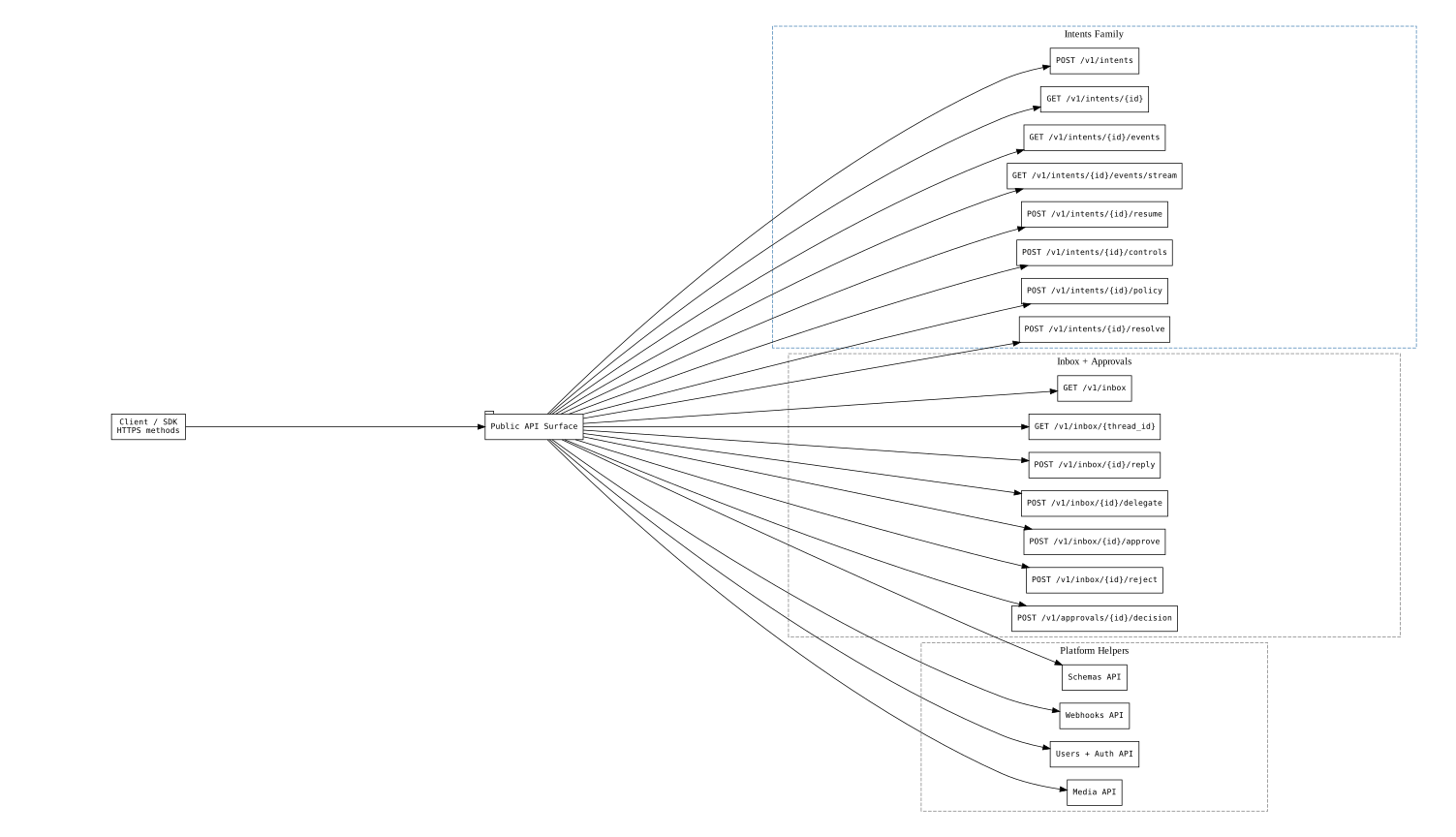
D1 families (intents, inbox, approvals) are the core integration path. D2 adds schemas, webhooks, and media. D3 covers enterprise admin. The Java SDK implements all three tiers.
Cursor-based list endpoints are available for inbox change streams:
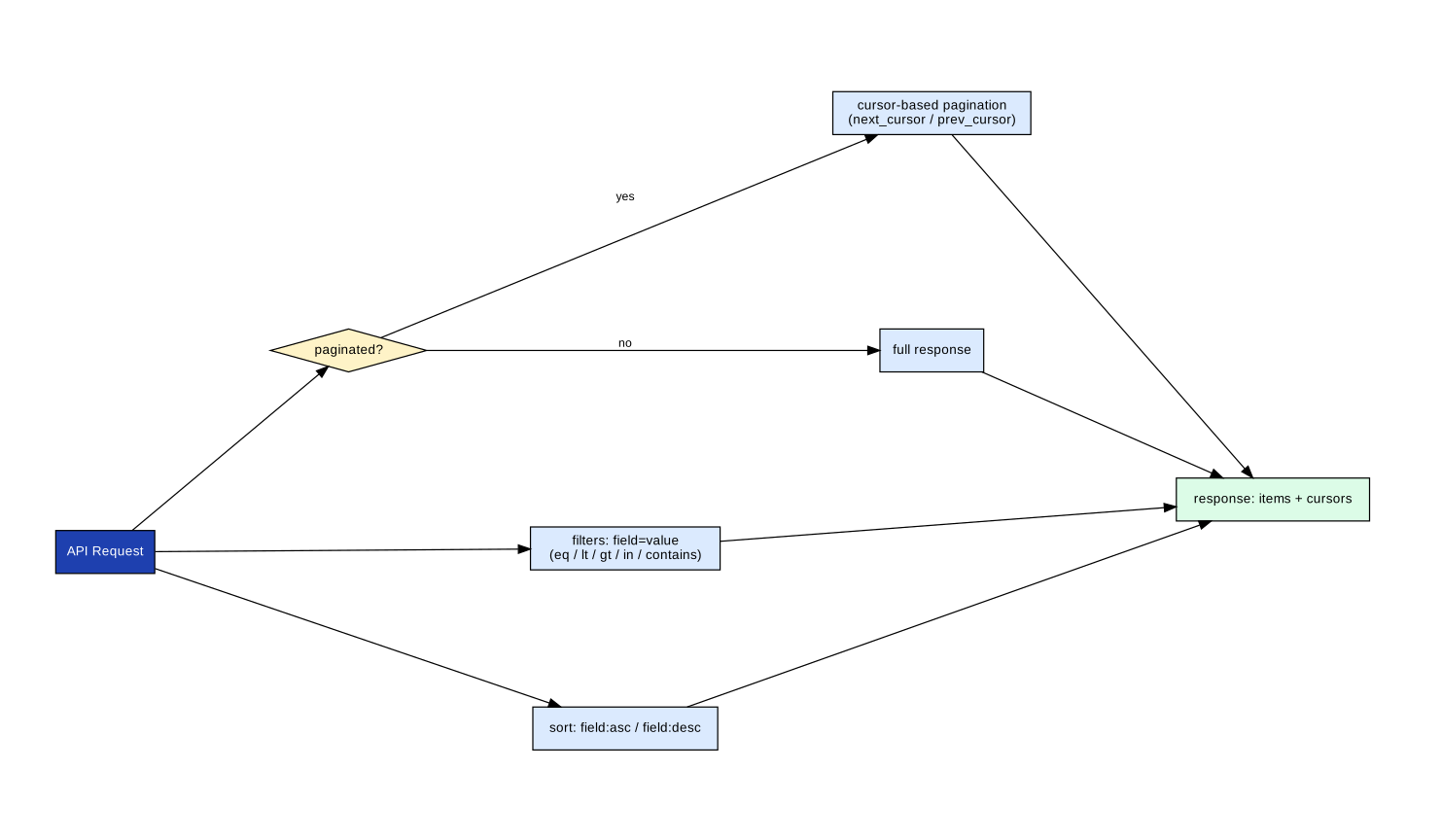
All list methods return a cursor field for the next page. Pass it as after in the next call. Filter and sort parameters are typed per endpoint.
// Paginate through inbox changes
Map<String, Object> page = client.listInboxChanges(
    "agent://manager",
    null,
    50,
    RequestOptions.none()
);

while (page.get("cursor") != null) {
    page = client.listInboxChanges(
        "agent://manager",
        (String) page.get("cursor"),
        50,
        RequestOptions.none()
    );
}AXME supports 8 human task types. Each pauses the workflow and notifies a human via email with a link to a web task page.
| Task type | Use case | Default outcomes |
|---|---|---|
approval |
Approve or reject a request | approved, rejected |
confirmation |
Confirm a real-world action completed | confirmed, denied |
review |
Review content with multiple outcomes | approved, changes_requested, rejected |
assignment |
Assign work to a person or team | assigned, declined |
form |
Collect structured data via form fields | submitted |
clarification |
Request clarification (comment required) | provided, declined |
manual_action |
Physical task completion (evidence required) | completed, failed |
override |
Override a policy gate (comment required) | override_approved, rejected |
// Create an intent with a human task step
var result = client.createIntent(CreateIntentParams.builder()
    .intentType("intent.budget.approval.v1")
    .toAgent("agent://agent_core")
    .payload(Map.of("amount", 32000, "department", "engineering"))
    .humanTask(HumanTask.builder()
        .title("Approve Q3 budget")
        .description("Review and approve the Q3 infrastructure budget.")
        .taskType("approval")
        .notifyEmail("approver@example.com")
        .allowedOutcomes(List.of("approved", "rejected"))
        .build())
    .build());
Task types with forms use form_schema to define required fields:
HumanTask.builder()
    .title("Assign incident commander")
    .taskType("assignment")
    .notifyEmail("oncall@example.com")
    .formSchema(Map.of(
        "type", "object",
        "required", List.of("assignee"),
        "properties", Map.of(
            "assignee", Map.of("type", "string", "title", "Commander name"),
            "priority", Map.of("type", "string", "enum", List.of("P1", "P2", "P3"))
        )
    ))
.build()Map<String, Object> inbox = client.listInbox("agent://manager", RequestOptions.none());
for (Object item : (List<?>) inbox.get("items")) {
Map<?, ?> entry = (Map<?, ?>) item;
Map<String, Object> action = (Map<String, Object>) entry.get("action");
if (action == null || action.get("approval_id") == null) {
continue;
}
client.decideApproval(
(String) action.get("approval_id"),
Map.of("decision", "approve", "reason", "Reviewed and approved"),
RequestOptions.none()
);
}Map<String, Object> created = client.createIntent(
Map.of(
"intent_type", "order.fulfillment.v1",
"owner_agent", "agent://fulfillment-service",
"payload", Map.of("order_id", "ord_123")
),
new RequestOptions("intent-ord-123", null)
);
String intentId = (String) created.get("intent_id");
Map<String, Object> current = client.getIntent(intentId, RequestOptions.none());
Map<String, Object> events = client.listIntentEvents(intentId, null, RequestOptions.none());The Java SDK includes the full service-account lifecycle surface:
// Create a service account
Map<String, Object> sa = client.createServiceAccount(
    Map.of("name", "ci-runner", "org_id", "org_abc"),
    new RequestOptions("sa-ci-runner-001", null)
);

// Issue a key
Map<String, Object> key = client.createServiceAccountKey(
    (String) sa.get("id"),
    Map.of(),
    new RequestOptions(null, null)
);

// List service accounts
client.listServiceAccounts("org_abc", "", RequestOptions.none());

// Revoke a key
client.revokeServiceAccountKey(
    (String) sa.get("id"),
    (String) key.get("key_id"),
    RequestOptions.none()
);
Available methods:
createServiceAccount/listServiceAccounts/getServiceAccountcreateServiceAccountKey/revokeServiceAccountKey
Map<String, Object> registered = client.registerNick(
    Map.of("nick", "@partner.user", "display_name", "Partner User"),
    new RequestOptions("nick-register-001", null)
);

Map<String, Object> check = client.checkNick("@partner.user", RequestOptions.none());

Map<String, Object> renamed = client.renameNick(
    Map.of("owner_agent", registered.get("owner_agent"), "nick", "@partner.new"),
    new RequestOptions("nick-rename-001", null)
);

Map<String, Object> profile = client.getUserProfile(
    (String) registered.get("owner_agent"),
    RequestOptions.none()
);Organizations can control which external orgs may send intents to their agents:
- Org receive policy — org-wide default (
open,allowlist,closed) - Agent receive override — per-agent exceptions to the org policy
// Get org receive policy
var policy = client.get("/v1/organizations/" + orgId + "/receive-policy");

// Set to allowlist mode
client.put("/v1/organizations/" + orgId + "/receive-policy",
    Map.of("mode", "allowlist", "allowlist", List.of("org_id_of_trusted_partner")));

// Per-agent override
client.put("/v1/agents/" + address + "/receive-override",
    Map.of("override_type", "allow", "source_org_id", "org_id_of_partner"));
See cross-org-receive-policy.md for the full decision flow.
The Java SDK includes a built-in MCP endpoint client for gateway-hosted MCP sessions.
// Initialize an MCP session
Map<String, Object> init = client.mcpInitialize(RequestOptions.defaults());
System.out.println(init.get("serverInfo"));

// List available tools
Map<String, Object> tools = client.mcpListTools(RequestOptions.defaults());
List<?> toolList = (List<?>) tools.get("tools");
for (Object tool : toolList) {
    Map<?, ?> t = (Map<?, ?>) tool;
    System.out.println(t.get("name"));
}

// Call a tool
Map<String, Object> result = client.mcpCallTool(
    "create_intent",
    Map.of(
        "intent_type", "order.fulfillment.v1",
        "payload", Map.of("order_id", "ord_123"),
        "owner_agent", "agent://fulfillment-service"
    ),
    RequestOptions.defaults()
);
System.out.println(result);
By default the SDK posts to /mcp. Override with mcpEndpointPath in client options.
axme-sdk-java/
├── src/
│   ├── main/java/dev/axme/sdk/
│   │   ├── AxmeClient.java        # All API methods
│   │   ├── AxmeClientConfig.java  # Configuration
│   │   ├── RequestOptions.java    # Idempotency key and correlation ID
│   │   └── AxmeAPIException.java  # Typed exception
│   └── test/                      # JUnit test suite
├── examples/
│   └── BasicSubmit.java           # Minimal language-native quickstart
└── docs/
mvn test| Repository | Role |
|---|---|
| axme-docs | Full API reference and integration guides |
| axme-spec | Schema contracts this SDK implements |
| axme-conformance | Conformance suite that validates this SDK |
| axme-examples | Runnable examples using this SDK |
| axme-sdk-python | Python equivalent |
| axme-sdk-typescript | TypeScript equivalent |
| axme-sdk-go | Go equivalent |
| axme-sdk-dotnet | .NET equivalent |
- Bug reports and feature requests: open an issue in this repository
- Quick Start: https://cloud.axme.ai/alpha/cli · Contact: hello@axme.ai
- Security disclosures: see SECURITY.md
- Contribution guidelines: CONTRIBUTING.md